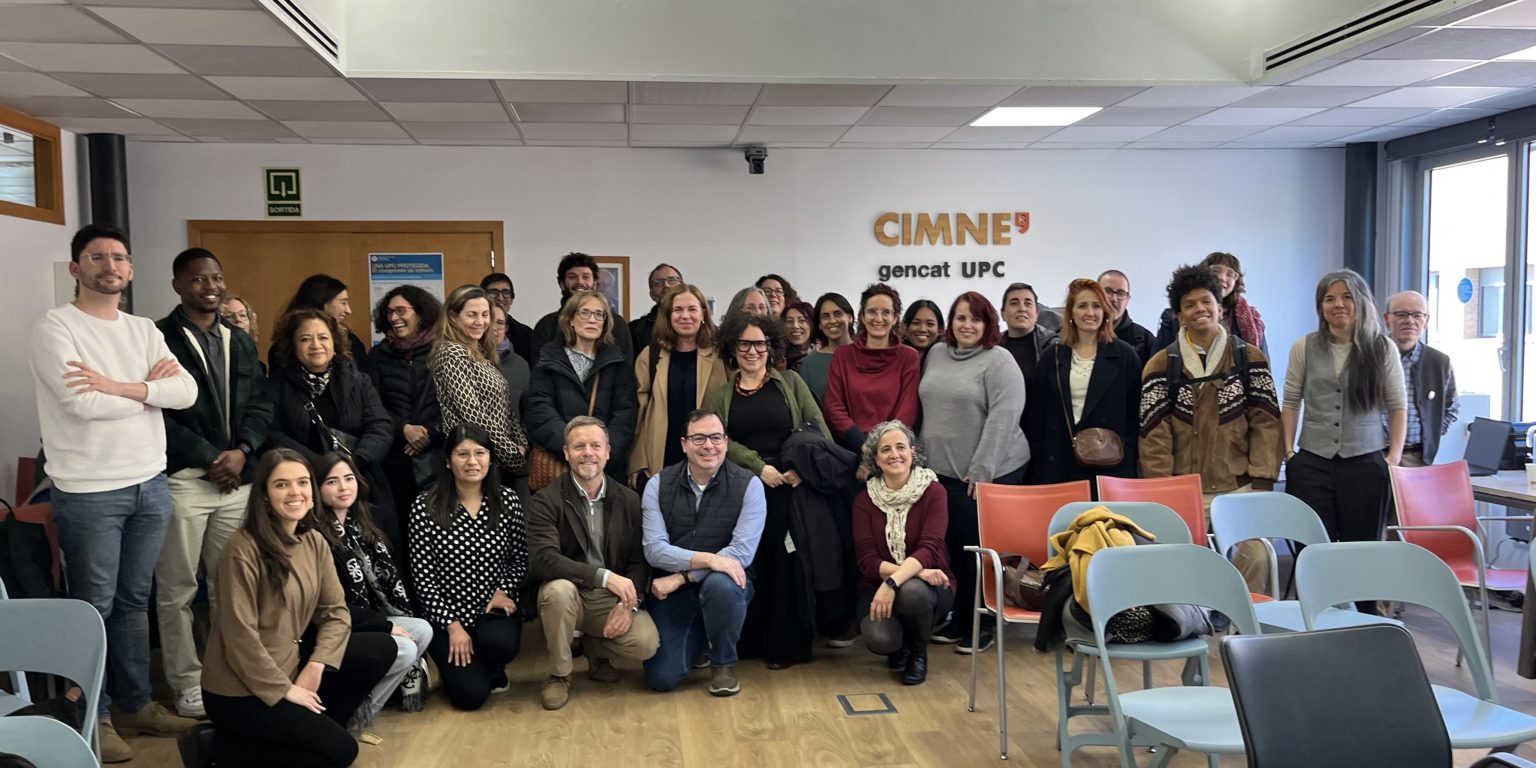
The CERCA Impact Community held its first session of the year this week at the CIMNE headquarters. The meeting brought together professionals from various centres to share experiences and reflections on research impact assessment—an area that continues to gain relevance both locally and internationally.
The session opened with contributions from Javier Bonet, Director of CIMNE and member of the assessment panel for the United Kingdom’s 2021 Research Excellence Framework (REF), and Jean Grugel, Principal Investigator at IBEI also a member of the REF 2021 Politics and International Studies panel. They offered insights into the challenges and opportunities that impact assessment represents in their respective fields, stressing that impact is, above all, a collective endeavour. It should not be understood as an individual exercise but rather as a shared process between teams and institutions.
Next, Victòria Miquel, Director of the Research Area (Research Personnel) at AGAUR, and Esther Vizcaíno, researcher at the AQuAS Research Lab, provided a closer look at the Catalan context. They explained how AGAUR is working to incorporate impact assessment into its programmes and how AQuAS promotes projects aimed at generating impact within the health system, using shorter and more targeted models.
The session continued with a presentation by Rebeca Zapata, officer at the Directorate-General for Knowledge Transfer and Society of the Ministry of Research and Universities, who outlined the new call for Grants for Projects with Impact on Society, open until 25 February.
Finally, Núria Benítez, Head of Strategy at I-CERCA, presented the next steps for the Impact Community in 2026. Planned actions include disclosure of some narratives submitted in 2024 so they can be shared with all centres as a working tool. This initiative will strengthen collective learning and support the organisation of much-demanded activities, such as training on qualitative and quantitative indicators, understanding non-result-oriented impact models, addressing the specificities of impact in basic research, training trainers, and developing new tools to advance the culture of impact.
In the coming days, contact will be made with the centres that have volunteered to open their narratives, as well as with the advisory board (RIAAB), to manage the necessary permissions.


