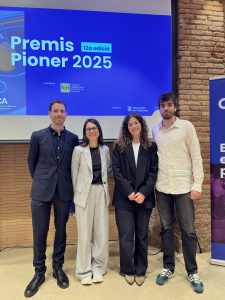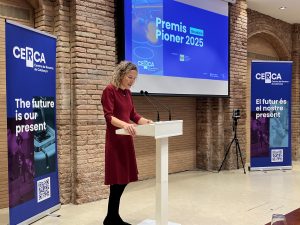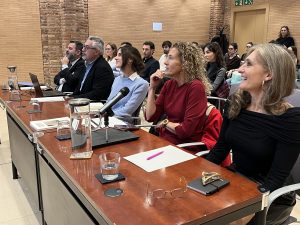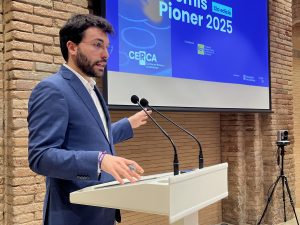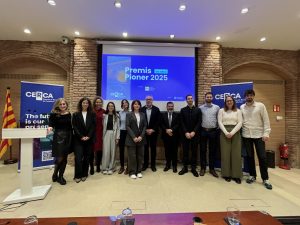
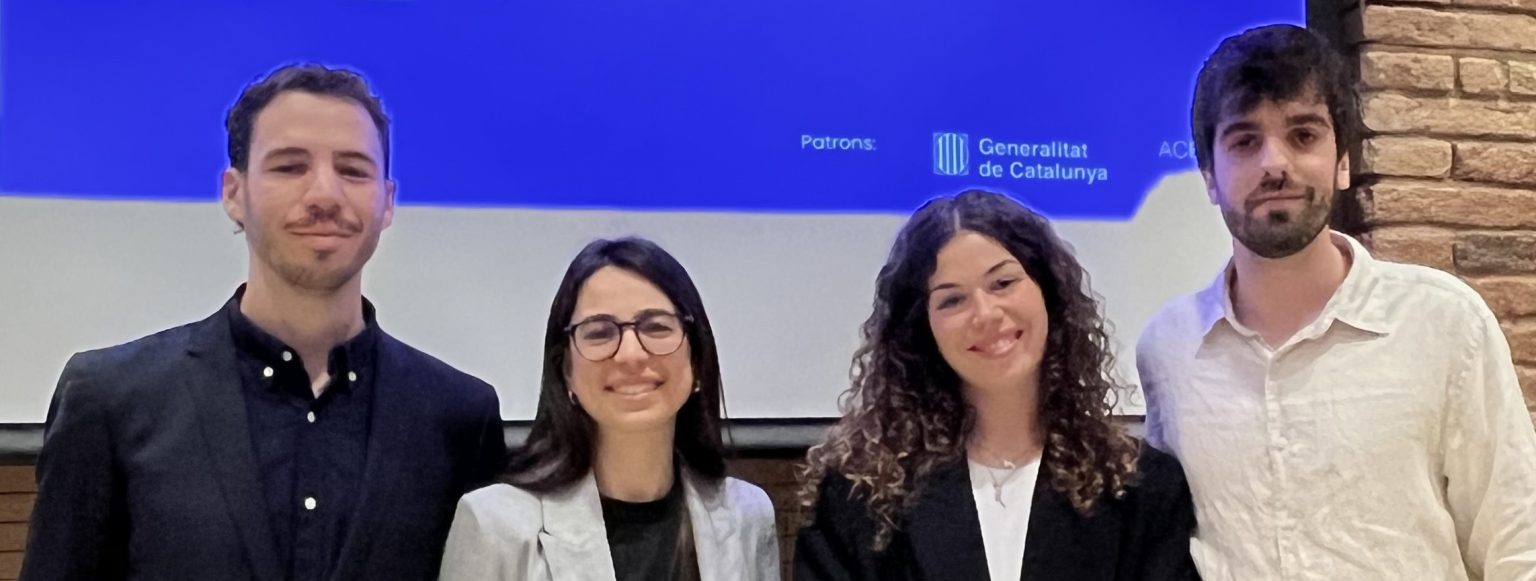
Today, the CERCA Institution hosted the final of the Pioner Awards 2025, a recognition of recent doctoral theses with the greatest potential to transform scientific knowledge into practical solutions for society and the market. The event brought together researchers, institutions, and partner organisations in a day that highlighted the value of technology transfer.
This year, 29 applications were received from 17 CERCA centres, with a notable figure: 15 were submitted by women. All share a common goal—taking research beyond the laboratory to generate real impact.
CERCA’s Director, Dr Laia Pellejà, emphasised “the quality of the work and the importance of turning science into economic, social, and industrial value.” The event also featured Meritxell Serra, Pioner Award winner in 2024, now Clinical Research Medical Advisor (CRMA) at Novartis Innovative Medicines.
Awarded Projects
The four prizes in this edition recognised innovative proposals in diverse fields:
Dr Aina Areny Balagueró designed an innovative strategy to treat Acute Respiratory Distress Syndrome, a severe condition with no specific treatment. The proposal combines microRNAs and inhalable nanocapsules to offer a viable clinical solution.
Her thesis was supervised by Dr Antonio Artigas Raventós and Dr Daniel Closa Autet, within the research group *Respiratory Pathophysiology in the Critical Patient* (A8G3 – Translational Research in the Critical Patient) at the Parc Taulí Research and Innovation Institute (I3PT).
Dr Paula Barbao Carrasco developed a CAR-T therapeutic platform resistant to cellular exhaustion, with potential to improve treatment for tumours such as breast and ovarian cancer, and adaptable to other designs.
Her thesis was supervised by Dr Sònia Guedan Carrió, head of the *Cellular Immunotherapies for Cancer* group, and Aleix Prat Aparicio, head of the *Translational Genomics and Targeted Therapies in Solid Tumours* group at the Fundació Clínic-IDIBAPS.
Dr Juan Carlos Núñez Rodríguez created CandiRes, a platform to discover new antifungal agents active against multi-resistant Candida species, using a unique biobank and innovative strategies.
His thesis was supervised by Dr Toni Gabaldón, from the *Comparative Genomics* group at IRB Barcelona.
Dr Carlos Rubio Maturana designed a low-cost system to diagnose malaria and schistosomiasis, based on artificial intelligence and a robotic microscope, validated both in hospitals and endemic areas.
His thesis was supervised by Dr Joan Joseph Munné, principal investigator at the Vall d’Hebron Research Institute (VHIR), and Dr Elisa Sayrol Clols from the Universitat Politècnica de Catalunya.
A Final with New Features
For the first time, eight finalists defended their proposals before the jury, which assessed them live and posed questions. The panel included Miquel Gómez, Director of FCRI; Núria Martí, Director of Innovation at Biocat; Rafael Gonzalez, Head of Knowledge Transfer Promotion at the Ministry of Research and Universities; Ona Estapé, Head of Transfer Operations at Mobile World Capital Barcelona; and Laia Pellejà, Director of the CERCA Institution.
Once again, the awards have been supported by the Catalan Foundation for Research and Innovation (FCRI).